
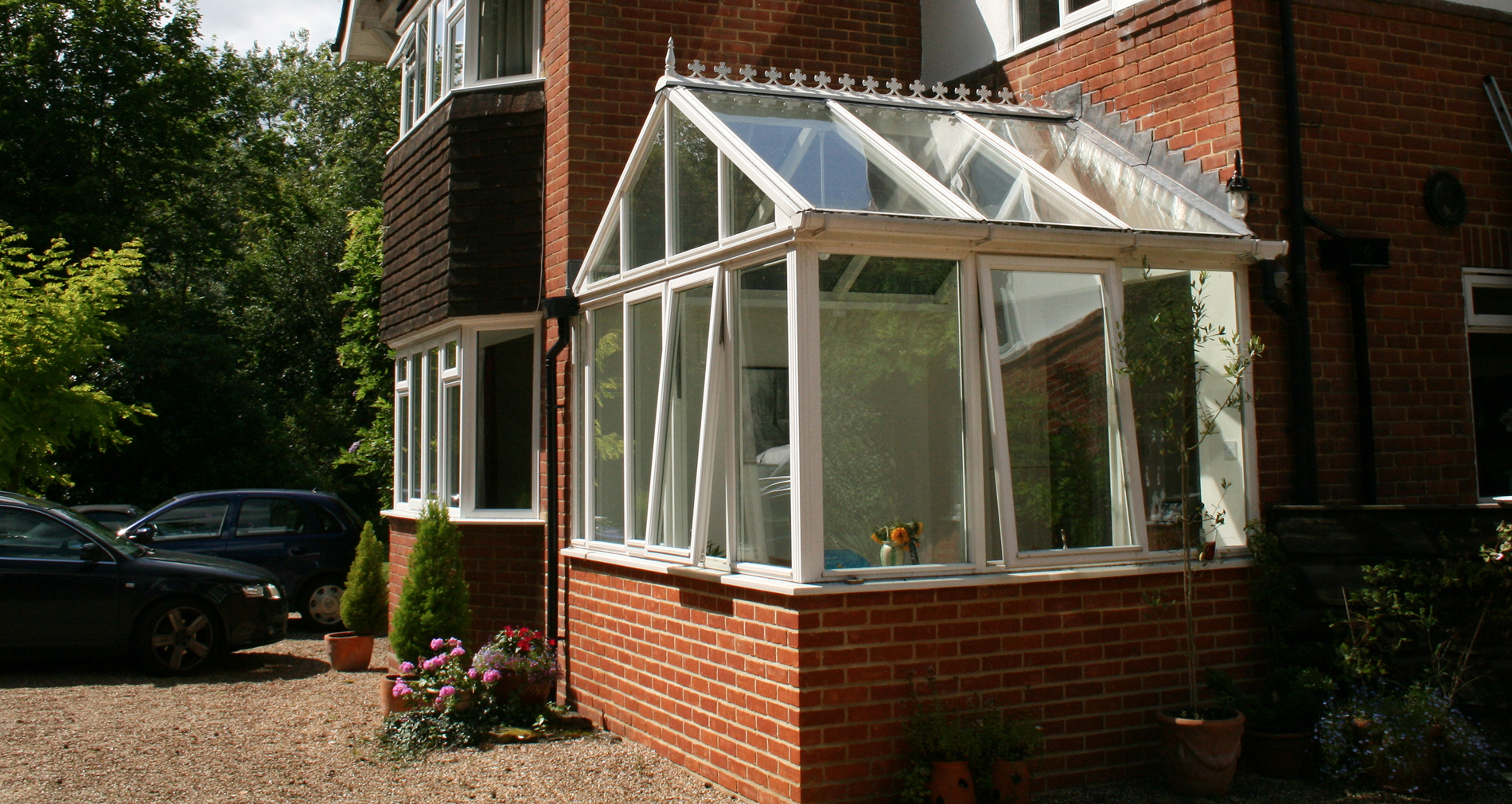
Conservatories & Orangeries
The glazing is what determines how a conservatory or orangery performs. We do that part properly.
We supply and fit the glazing elements of conservatories and orangeries across South Buckinghamshire and East Berkshire — roofs, windows, doors, and glazed panels — working alongside your builder. FENSA registered since 2003.
Conservatory and orangery glazing across South Bucks and East Berkshire
A conservatory or orangery is only as good as its glazing. The structure gives it shape — the glazing determines whether it is warm, light, quiet, and worth using all year.
Building a conservatory or orangery typically involves two distinct trades: a builder who handles the foundations, brickwork, and structural elements, and a glazing specialist who supplies and fits the roof system, windows, doors, and glazed panels onto the completed structure. We are the glazing specialist. We have been doing this part across South Buckinghamshire and East Berkshire since 2003 — Victorian, Edwardian, lean-to, gable, and orangery configurations across a wide range of properties, from cottage extensions in Fulmer and Farnham Royal to larger orangeries on detached homes in Gerrards Cross and Beaconsfield. Every glazing installation we complete is FENSA registered.
Most people who contact us for conservatory or orangery glazing are at one of two stages. They are planning a new build and their builder has advised them to find a glazing specialist separately — which is the right approach, and the one that gives the homeowner proper accountability over each element of the project. Or they have an existing conservatory with a failing or inadequate roof, and they are looking at upgrading it to a modern glass or solid roof system that makes the space usable throughout the year. In both cases, the process starts with a visit from us to understand the structure, the specification, and what is actually required. We will tell you clearly what falls within our scope and what does not, and if something is outside our remit we will say so rather than take it on and compromise the result.
Why it matters
What well-specified conservatory glazing brings to the finished space
Comfort
A space that is usable in January as well as July
The reputation that conservatories have for being too hot in summer and too cold in winter belongs almost entirely to older structures with polycarbonate roofs, single-glazed panels, and no solar control. A properly specified modern conservatory — with thermally efficient glazed units, solar control glass on exposed aspects, and a correctly insulated connection to the house — performs as a year-round room. The difference between a conservatory that is used daily and one that sits empty for six months of the year is almost entirely a glazing specification decision. Getting the specification right at the point of construction is far less expensive than retrofitting a better roof system afterwards, which is something we are called to do regularly across South Bucks on conservatories built a decade or more ago.
Light
The primary reason people build conservatories — and it requires the right glass
A conservatory's fundamental purpose is to bring light into the home and create a sense of connection to the garden. Achieving this without the space becoming a glasshouse in summer requires a glazing specification that manages solar heat gain intelligently. Solar control glass allows light through while reflecting a meaningful proportion of the solar heat that would otherwise enter with it. On a south or west-facing aspect — which covers the majority of rear elevations in the properties of Ascot, Windsor and the South Bucks villages — this is not a refinement, it is a baseline requirement. Without it, the space will be uncomfortable during the months when it should be most enjoyable.
Value
A well-glazed conservatory adds more than a poorly specified one
Estate agents across the South Bucks and East Berks area consistently note that a conservatory adds value only when it is clearly usable and well-finished. A cold, draughty, or visually tired conservatory with mismatched frames or a polycarbonate roof that has yellowed with age can actively detract from a property's saleability. A modern, well-specified conservatory — with consistent aluminium or uPVC frames, a quality glass or solid roof, and doors that open properly onto the garden — is an asset. The glazing specification is the difference. For the homeowners in Gerrards Cross, Beaconsfield and Windsor who are investing at this level in their properties, getting the glazing right is not optional.
Clarity
A clear scope means no ambiguity and no disputes at handover
One of the most common sources of frustration on conservatory projects is unclear accountability between the builder and the glazing contractor. When something does not fit, when a dimension is wrong, when a panel needs adjustment, the question of who is responsible can become difficult to resolve. We avoid this by providing precise written dimensions before fabrication, visiting the site to verify the structure before delivery, and defining our scope explicitly in writing before any work begins. What we supply and fit is documented. What the builder is responsible for is documented. There is no grey area, and there is a single point of contact for each element of the project.
Our work
Conservatory and orangery glazing across South Bucks and East Berkshire
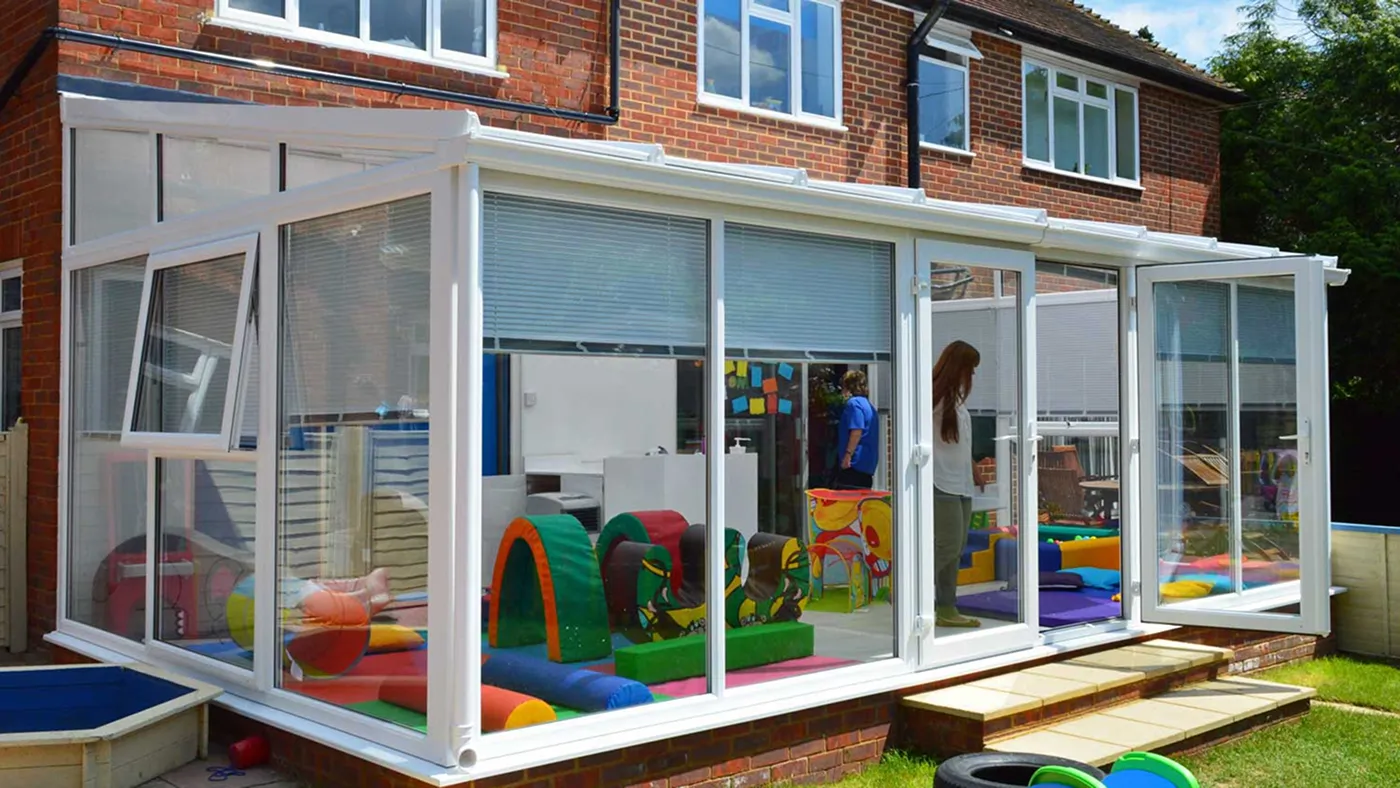
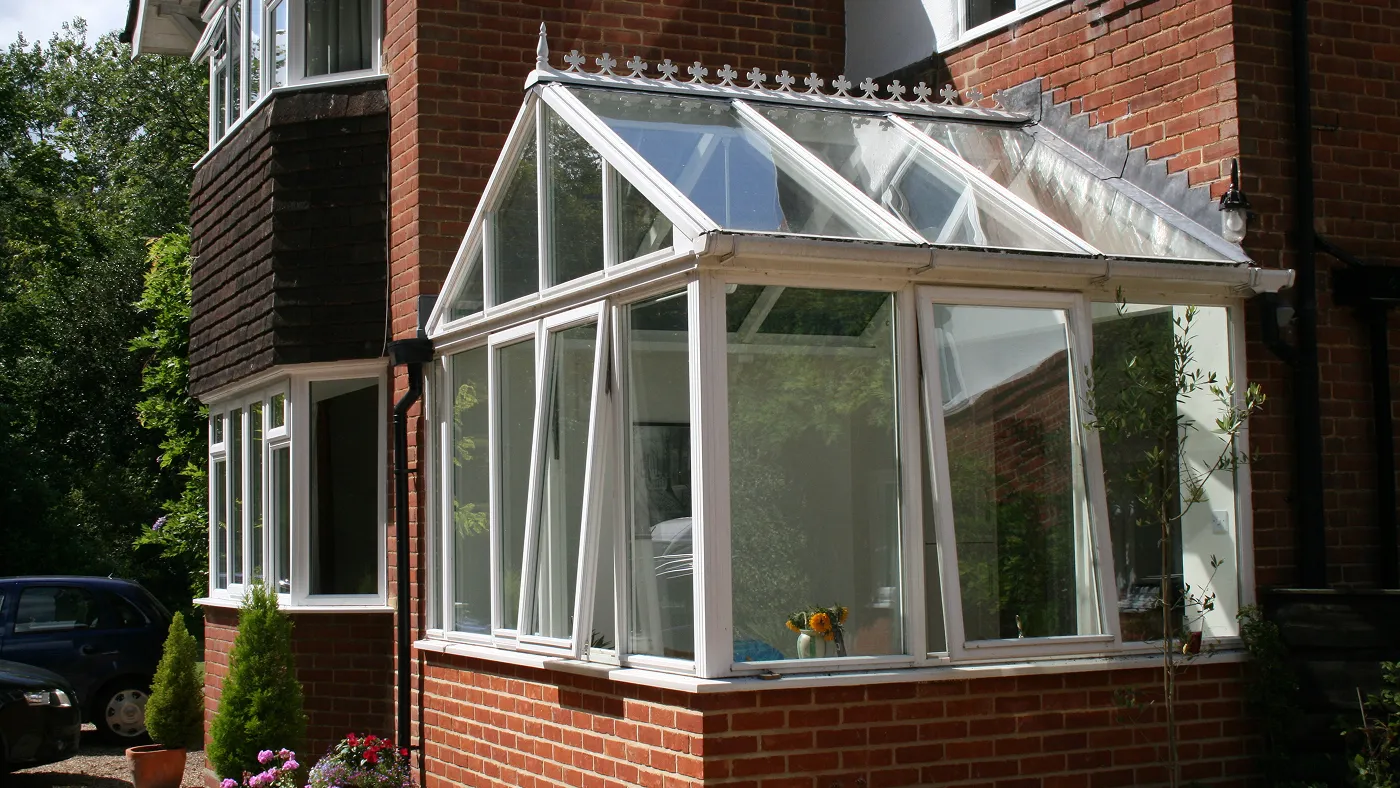
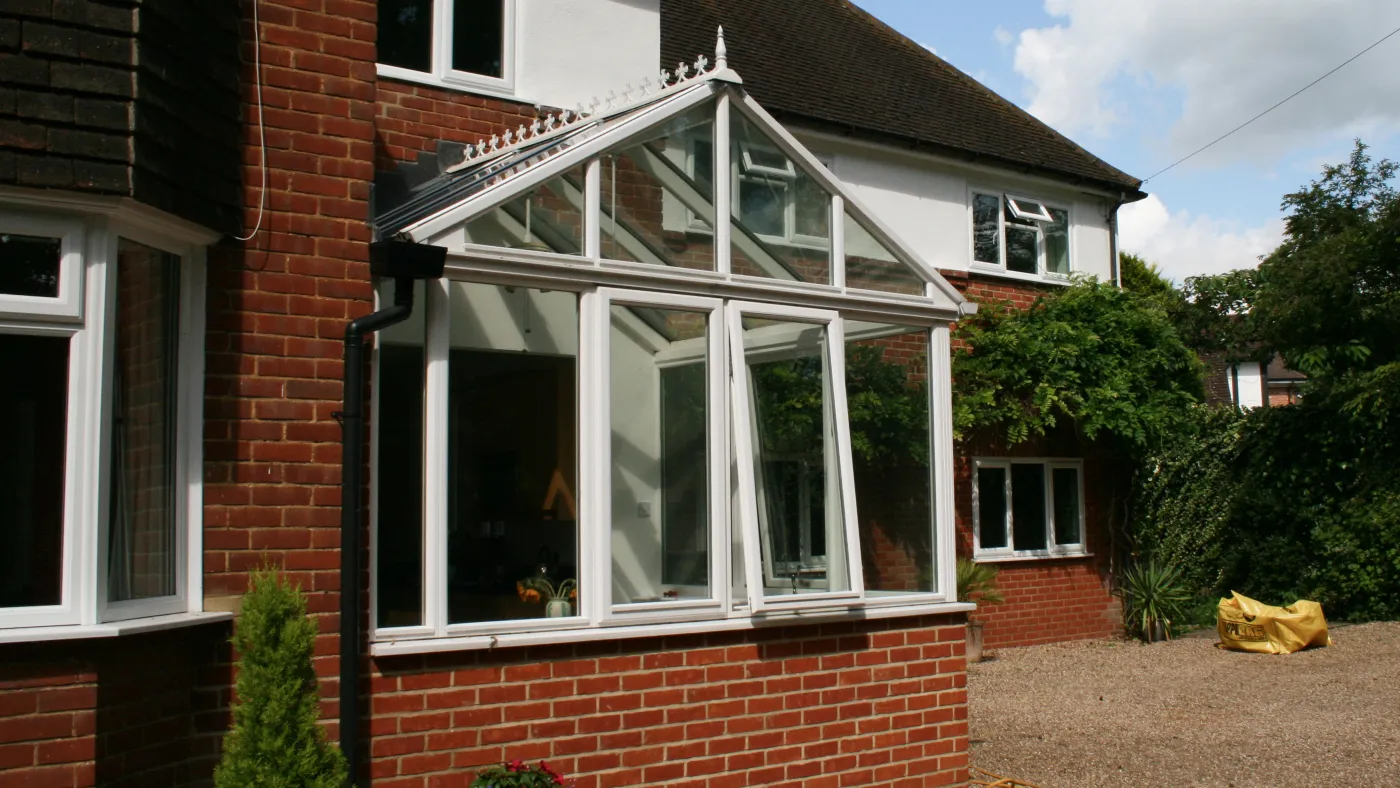
Lean-to conservatory · Chalfont St Peter
01 / 03Styles
Victorian, Edwardian, lean-to, gable, and orangery
The style of conservatory or orangery that suits a property is determined primarily by the shape of the rear elevation, the available footprint, and the character of the house. The glazing configuration follows from the structural design agreed with the builder. We advise on glazing specification for each style during the home visit.
Most Common
Victorian
The Victorian style is characterised by a faceted bay at the front elevation, a ridge running the length of the structure, and a multi-faceted roof that follows the same curved plan. It suits a wide range of property types and is the most commonly specified conservatory style across South Buckinghamshire — particularly on the 1930s and post-war detached and semi-detached stock of Burnham, Taplow, Stoke Poges and the outer streets of Slough. The faceted glazing panels require accurate measurement and careful fitting; the ridge and hip intersections are the most technically demanding elements of the glazing installation.
Best for
Clean and Practical
Edwardian and Lean-To
The Edwardian style uses a rectangular plan with a straight-ridged roof — simpler in geometry than the Victorian and typically more space-efficient for the same footprint. The lean-to is simpler still: a single-pitch roof running from the house wall down to the front elevation of the structure, suited to narrow plots or low-height rear elevations where a pitched roof would require planning consideration. Both styles are common across the South Bucks area and are straightforward to glaze precisely because the geometry is regular. The lean-to is particularly well suited to properties with restricted rear width, including many of the terraced and semi-detached properties in Slough and Iver.
Best for
Premium Choice
Orangery
An orangery uses solid brick or masonry pillars and a perimeter flat roof section with a central roof lantern — the combination that gives the structure its distinctive character and its significantly better thermal performance compared to a fully glazed conservatory. Our scope on an orangery covers the roof lantern, the glazed windows and doors within the solid wall sections, and any additional glazed panels. The result feels like a room that is part of the house rather than an addition to it — which is why orangeries are increasingly the preferred choice for larger projects in Gerrards Cross, Windsor and Beaconsfield, where the investment is substantial and the expectation is year-round daily use.
Best for
What to consider
How the glazing specification shapes the finished result
The structural decisions — footprint, style, height, foundations — are agreed between you and your builder. Once the structure is taking shape, the glazing decisions begin. These are the ones we advise on, and they have a direct bearing on how the space performs and feels.
01
The roof system — glass, solid, or a combination
The roof is the most consequential glazing decision on any conservatory or orangery. A fully glazed glass roof admits the most light but requires solar control glass to prevent the space overheating in summer, and the highest-performing glazed units to minimise heat loss in winter. A solid insulated roof — sometimes called a warm roof or tiled roof system — gives the space the thermal performance of a conventional room but reduces the overhead light significantly. A hybrid approach, combining a solid perimeter with a central glass panel or roof lantern, is increasingly common on orangeries and on conservatory conversions where the owner wants better thermal performance without losing the light overhead. We discuss the options and the trade-offs during the visit, with reference to your specific aspect, your use of the space, and your builder's structural design.
Practical note
If you are replacing the roof on an existing conservatory rather than building new, the existing frame condition and structural capacity need to be assessed before any new roof system is specified. We do this as part of the survey.
02
Glazed units — thermal performance and solar control
The glazed units in a conservatory roof and walls must balance three competing requirements: thermal insulation to keep heat in during winter, solar control to prevent overheating in summer, and light transmission to serve the fundamental purpose of the space. Standard double-glazed units with low-emissivity glass and argon fill perform well against current building regulations. For south-facing aspects — common across the rear of properties along the A355 corridor and in Ascot — solar control glass is specified as standard, not as an upgrade. For particularly exposed aspects or where triple-glazing performance is wanted, we advise on the appropriate unit specification during the visit. All glazed units in a new conservatory must meet current building regulations thermal requirements, and we confirm compliance before any order is placed.
Practical note
Self-cleaning glass coatings are available for conservatory roof panels and reduce the frequency of maintenance cleaning. On a roof surface that is difficult to access safely, this is worth considering as part of the initial specification.
03
Doors and windows within the glazed elevations
The doors and opening windows within the conservatory walls are specified as part of the same package as the roof and fixed glazed panels — they need to be consistent in material, colour, and thermal specification. A conservatory that combines an aluminium roof with uPVC walls, or mismatched frame colours between the house and the conservatory, looks unresolved and undermines the investment. We specify the full glazing package as a coherent system: roof, walls, and doors in matched materials and finishes. The door type within the conservatory — typically French doors, a patio sliding door, or bi-fold doors on the garden-facing elevation — is agreed during the visit in the context of how the space will be used.
Practical note
The internal door between the house and the conservatory — where the conservatory is separated from the main house thermally — is typically a standard internal door supplied by the builder. We advise on the interface between our scope and the builder's scope during the survey.
04
Coordinating with your builder
Our scope begins once the structural shell — foundations, brickwork or timber frame, and the structural roof kerbs or wall plates — is in place and to the agreed dimensions. The most common source of delay or error in conservatory projects is a mismatch between the structural dimensions the builder has built to and the glazing dimensions we have specified. We address this by providing your builder with precise structural dimensions from our survey before any glazing is fabricated, and by visiting the site to verify dimensions before delivery. If you are in the early stages of planning and have not yet appointed a builder, we can provide structural glazing dimensions to incorporate into the builder's brief from the outset.
Practical note
We are happy to speak directly with your builder at any stage of the project to align on dimensions, sequencing, and the interface between structural and glazing elements. This is standard practice for us and prevents the most common causes of project delay.
Reviews
What your neighbours are saying
Real reviews from homeowners across South Bucks and East Berkshire. Every one verified through Google.
We couldn't be more happier with your lovely work men who were very polite and helpful. We will call again one day x
Mrs Ryan
Hayes
We were very happy with the service we received. We understand the delays were out of your control. The guys who came to fit the windows were really nice and efficient. Joe has been lovely from start to finish on this job! Alpha Windows has given us the best level service from all the window companies that we spoke to. The other companies had poor service and one of them was quite rude. So overall, we can't complain and are happy we went with Alpha windows!
Mr & Mrs Hussain
Stoke Poges
I should have posted this 4 years ago when I had my windows done but was lazy extremely happy with all my windows & front door. I wanted to check something’s. Amazing customer service from Victoria! & Joe came round the next day after 4 years! Cannot recommend Alpha enough! Only company I will be using. Thanks all at Alpha.
Tim Davis
Iver
We have been regular customers of Alpha Windows for some time and have always found them professional and easy to deal with. Visits for quotes are arranged swiftly and quotes are received promptly too. The fitting team are always very helpful, do a good job and leave the premises clean and tidy.
Hannah Graves
Gerrards Cross
It has been a total pleasure to work with you all over the last couple of months. Since the drama with Ridgwell we were worried about trusting another company but from the first contact with you via phone and seeing you face to face in the showroom we were put at ease. You were so friendly and listened to our needs and worries and helped us chose what was right for us.
Claire
Iver
From the initial engagement right through to the installation, Alpha Windows have been outstanding. Every question I had was answered promptly and clearly, and they were extremely helpful in accommodating my requested design. The pricing was very competitive, and the final product exceeded my expectations — the door and surrounds are absolutely beautiful.
Nicola
Gerrards Cross
Common questions
What homeowners ask us about conservatory and orangery glazing
-
Our scope is the glazing elements: the roof system, windows, doors, and glazed panels. The foundations, brickwork, structural frame, and associated groundwork are carried out by a builder. These are separate contracts with separate accountability, and we recommend keeping them that way — it means you have a glazing specialist responsible for the glazing and a builder responsible for the structure, rather than one party sub-contracting the other with less direct accountability to you. If you do not have a builder yet, we are happy to provide our structural glazing dimensions so you can incorporate them into your builder brief from the outset. We can also advise on sequencing — when to bring us in relative to the structural build stage.
-
We supply and fit the roof glazing system, all windows and opening vents within the conservatory walls, the external doors, and any fixed glazed panels. We do not carry out foundations, brickwork, wall construction, electrical work, plastering, flooring, or plumbing. The internal door between the house and the conservatory, where one is required, is typically supplied and fitted by the builder as part of the structural works. We provide precise dimensions for the structural openings we require, and we visit the site to verify these dimensions before fabrication begins.
-
In many cases, yes. Conservatory roof replacement is one of the most common projects we carry out — replacing a failed or underperforming polycarbonate or original glass roof with a modern thermally efficient glass system, a solid insulated roof, or a combination of both. Whether the existing frame can support a new roof system depends on its condition and construction, which we assess during the home visit. If the frame is sound, roof replacement is straightforward. If it has structural issues, we advise on what remedial work is needed before a new roof can be fitted, and whether the builder or we should carry it out.
-
Most conservatories fall within permitted development rights and do not require a planning application, provided they meet certain size and siting criteria — broadly, that the structure does not exceed half the original garden area, does not project beyond the rear wall of the original house by more than a specified distance, and does not exceed a specified height. Orangeries are treated as single-storey extensions for planning purposes and the same criteria generally apply. Properties in conservation areas — including parts of Beaconsfield Old Town, Windsor, and several village centres within South Buckinghamshire — and listed buildings are subject to additional restrictions. We identify what applies to your property during the home visit and advise on how to proceed. Your builder will also need to notify building control for the structural elements of the project.
-
The glazing installation on a standard conservatory — roof, windows, and doors — typically takes two to three days once the structural shell is in place and verified to our dimensions. A larger structure or one with a more complex roof geometry may take longer. We give you a specific timeline during the quoting process and coordinate the installation date directly with your builder to make sure the structural work is at the right stage before we arrive.
-
For most window and door replacements, no. Like-for-like replacements fall under permitted development rights and require no planning permission. If your property is in a conservation area — parts of Windsor and Beaconsfield Old Town, for example — or if it's listed, there may be restrictions on colour, style, or material. We know the local areas well and will flag anything relevant during your visit.
-
Yes. FENSA registration means every installation we complete is certified to meet current building regulations, and the work is registered with your local authority automatically. This is important if you ever sell your home — solicitors will ask for it. You don't need to do anything; we handle the registration on your behalf.
-
Our installations come with a 10-year guarantee as standard, covering both frames and sealed glazing units. Combined with FENSA registration and our full public liability insurance, you're protected throughout the installation and long after completion.
-
Yes. We remove all old frames and glass and dispose of them responsibly. We also leave your home clean and tidy at the end of every job — it's part of how we work, not an optional extra.
-
We don't consider a job complete until you're satisfied. If something isn't right, tell us and we'll fix it. Our reputation in South Bucks has been built over 20 years — we have every reason to make sure you're happy.
The process
What happens from first contact to finished installation
Get in touch
Tell us what you are thinking
Fill in the short form below or give us a call on 01753 663663. There is no obligation and no sales process triggered by making contact — just let us know what you are considering and we will take it from there.
We visit your home
A proper look at your property
We visit at a time that suits you — usually within a few days. We measure every opening, assess what is there, and talk through your options honestly. We bring samples so decisions can be made against your actual property in natural light.
Your written quote
Clear costs, no surprises
We follow up with a written quote that covers everything involved. No hidden charges, no items that appear later. There is no pressure to decide on the day and no uninvited follow-up calls. You take as long as you need.
Installation
Done properly, left tidy
Our fitters work through each opening one at a time so your home is never left exposed. Furniture and flooring are protected throughout. Old frames are removed and disposed of. Before we leave, everything is tested and you are walked through the result.
Free no-obligation quote
Get a free quote for your conservatory or orangery glazing
Tell us about your project — whether you are planning a new build or looking at a roof replacement on an existing conservatory. We will be in touch within one working day to arrange a visit at a time that suits you. No obligation, no automated calls.
What to expect
No pressure, no obligation
We'll never chase you or push for a decision on the day.
We visit your home personally
Every property is different — we measure properly before quoting.
Clear, itemised quote — no hidden costs
A written quote with everything included. Take as long as you need.
Your details stay private
We'll never share your details or add you to a mailing list.