
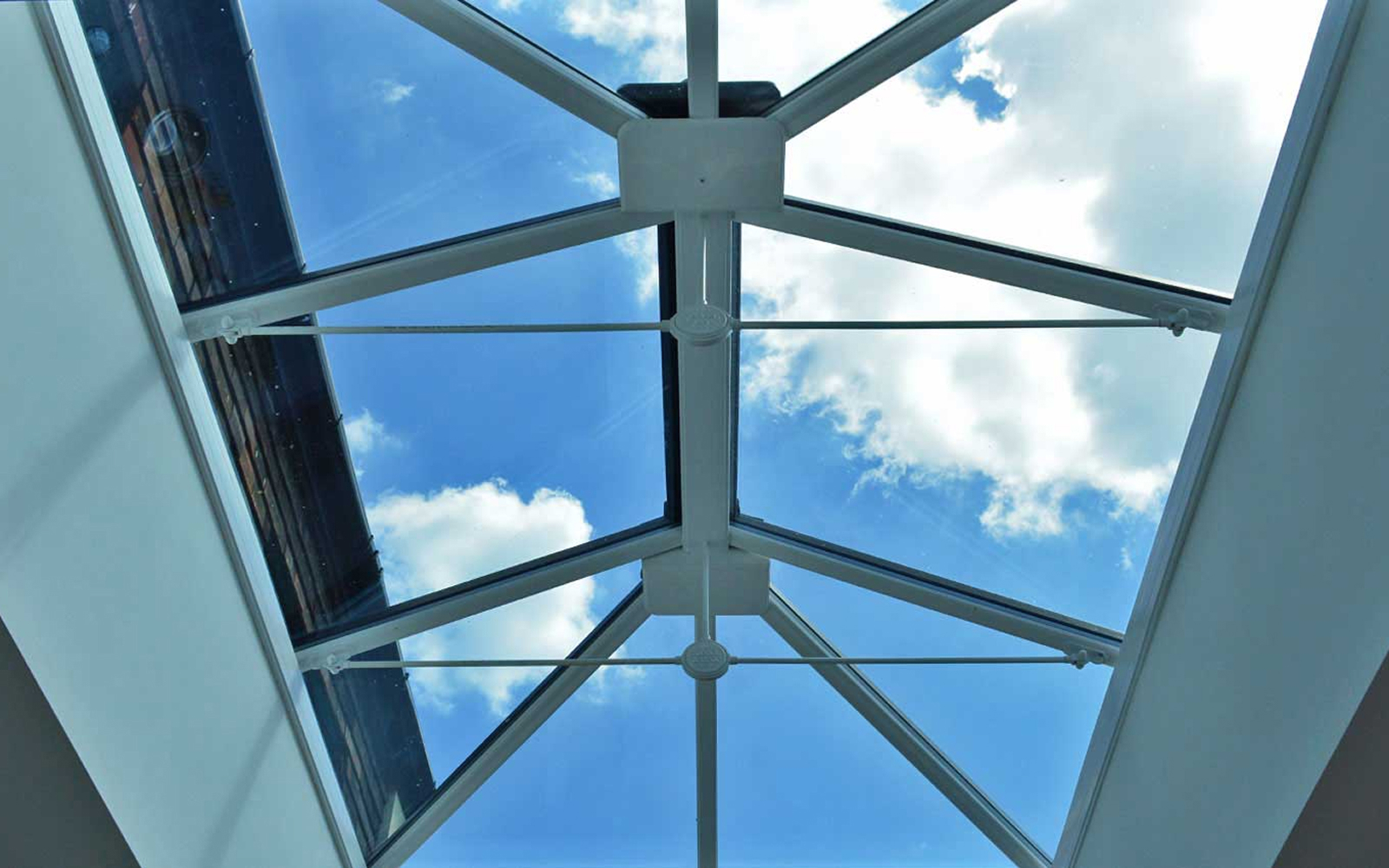
Rooflights & Roof Lanterns
Overhead light changes a room in a way that wall glazing simply cannot
We supply and fit roof lanterns and flat rooflights to extensions, kitchen-diners and loft conversions across South Buckinghamshire and East Berkshire. Every installation is FENSA registered and completed by our own team since 2003.
Overhead glazing fitted across South Bucks and East Berkshire
The difference between a well-lit extension and a dark one is usually not the windows on the walls — it is whether there is light coming from above.
Overhead glazing — whether a roof lantern raised above the roof plane or a flat rooflight set flush with the roof surface — delivers natural light into a room in a fundamentally different way from any wall window or door. Light entering from directly above distributes across the full floor area, illuminates the central zone rather than just the perimeter near the glass, and creates a sense of height and openness that side glazing cannot replicate. For single-storey extensions, kitchen-diners, and orangeries across Gerrards Cross, Windsor, Beaconsfield and Ascot — where the room often runs the full depth of the house and the rear wall may be the only source of wall glazing — overhead glazing is frequently the element that determines whether the space is genuinely pleasant to be in all year round.
We supply and fit two types of overhead glazing: roof lanterns, which sit above the roofline on a raised aluminium frame and add height as well as light to the room beneath, and flat rooflights, which sit level with or just proud of the roof surface for a more discreet external profile. Both deliver the same quality of overhead natural light. The right choice depends on the room, the roof, and the planning context. We advise on which product is right for your specific situation during the home visit, and we will tell you honestly if neither is the appropriate specification.
Why it matters
What overhead glazing brings to your home
Light
Overhead light that reaches every part of the room below
Light entering from above distributes across the floor area beneath it. It does not create the directional shadow zones that wall glazing produces, and it does not diminish rapidly with distance from the source the way side light does. A kitchen-diner that runs six or seven metres from the rear wall of the house — a common configuration in extended South Bucks properties — will have a dark central zone regardless of how well the rear wall is glazed. A roof lantern or flat rooflight positioned above that central zone eliminates it. The effect on how the room reads at every time of day, not just in the hours when direct light enters from the rear, is immediate and significant.
Space
A room that reads larger and taller than its dimensions
A roof lantern raises the perceived ceiling height in the zone beneath it, drawing the eye upward and making the room feel less confined than a flat, opaque ceiling of the same height. Flat rooflights achieve the same reduction in visual weight overhead with a lower structural profile. In both cases, the presence of sky above — even on overcast days — changes how the room is experienced. In the properties of Gerrards Cross, Beaconsfield, and Windsor, where the quality of interior space is a meaningful part of the property's value, this is a genuine enhancement that no additional wall glazing can replicate.
Value
A feature that improves how the room is described and experienced
Estate agents consistently identify kitchen extensions with well-specified overhead glazing as among the most saleable ground-floor configurations in the South Buckinghamshire and East Berkshire market. The combination of overhead light, a sense of height, and the connection to the sky is difficult to convey in photographs but immediately apparent on a viewing. For homeowners who have invested in extending their home, overhead glazing is frequently the element that makes the extension feel like the rest of the house rather than an addition to it. Getting it right at the point of construction is substantially cheaper than addressing it later.
Quality
A long-term installation that requires minimal maintenance
A well-specified and correctly installed aluminium roof lantern or flat rooflight requires very little maintenance over its lifetime. The powder-coated aluminium frame does not corrode, rust, or require painting. The glazed units are sealed for life and do not require re-sealing under normal circumstances. The external surface benefits from occasional cleaning — rainfall does much of this naturally on a pitched lantern surface — and the seals and flashings should be checked as part of general property maintenance. Beyond this, a properly installed overhead glazing unit should give many years of reliable performance without requiring professional attention.
Our work
Roof lanterns fitted across South Bucks and East Berkshire
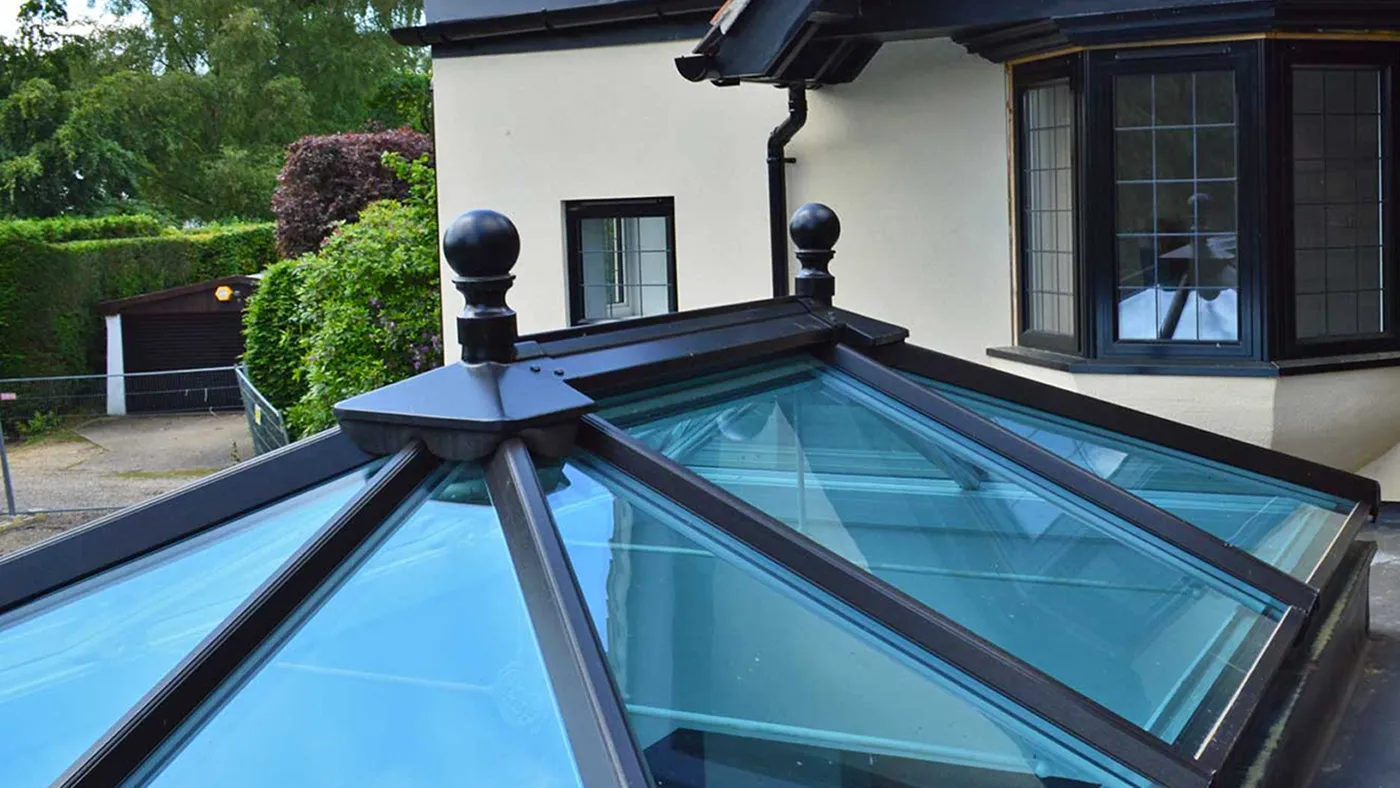
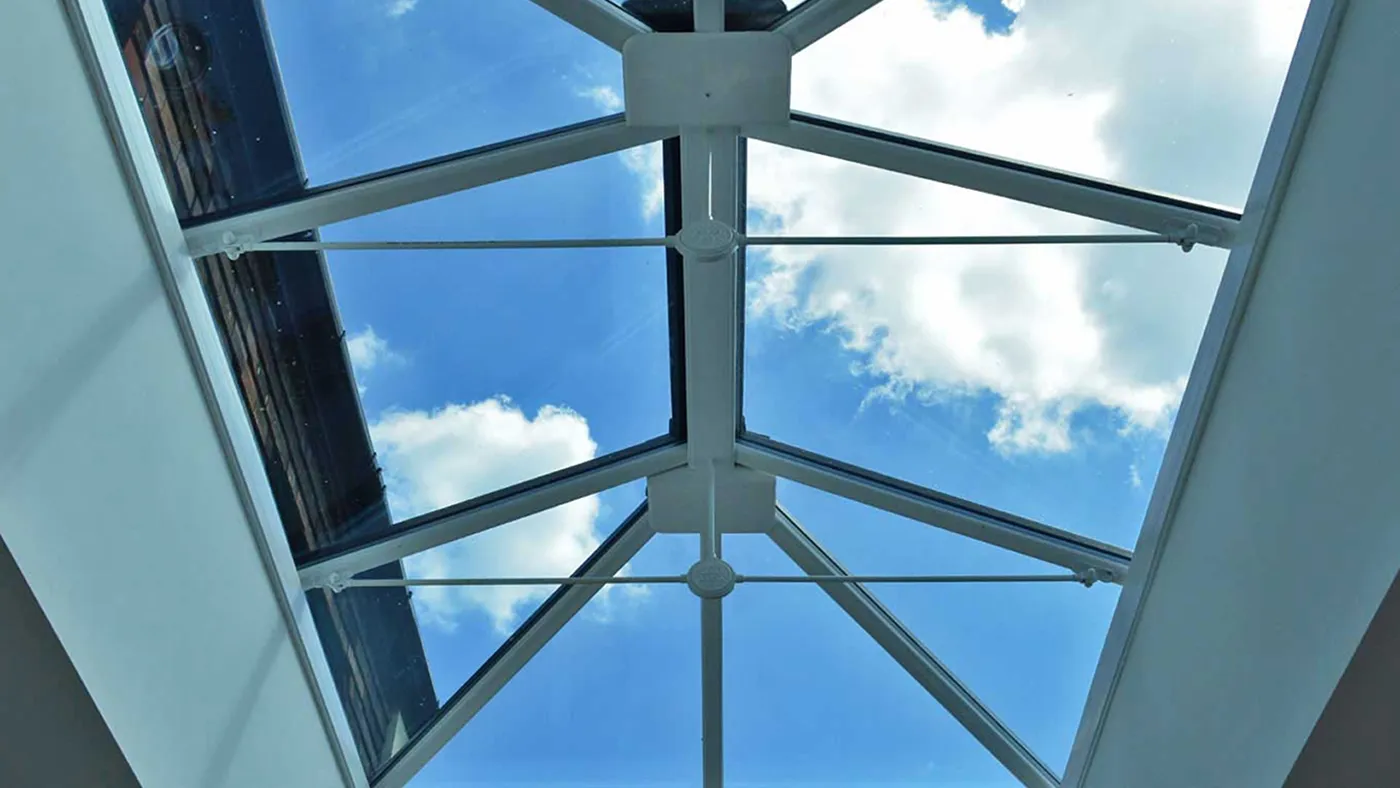
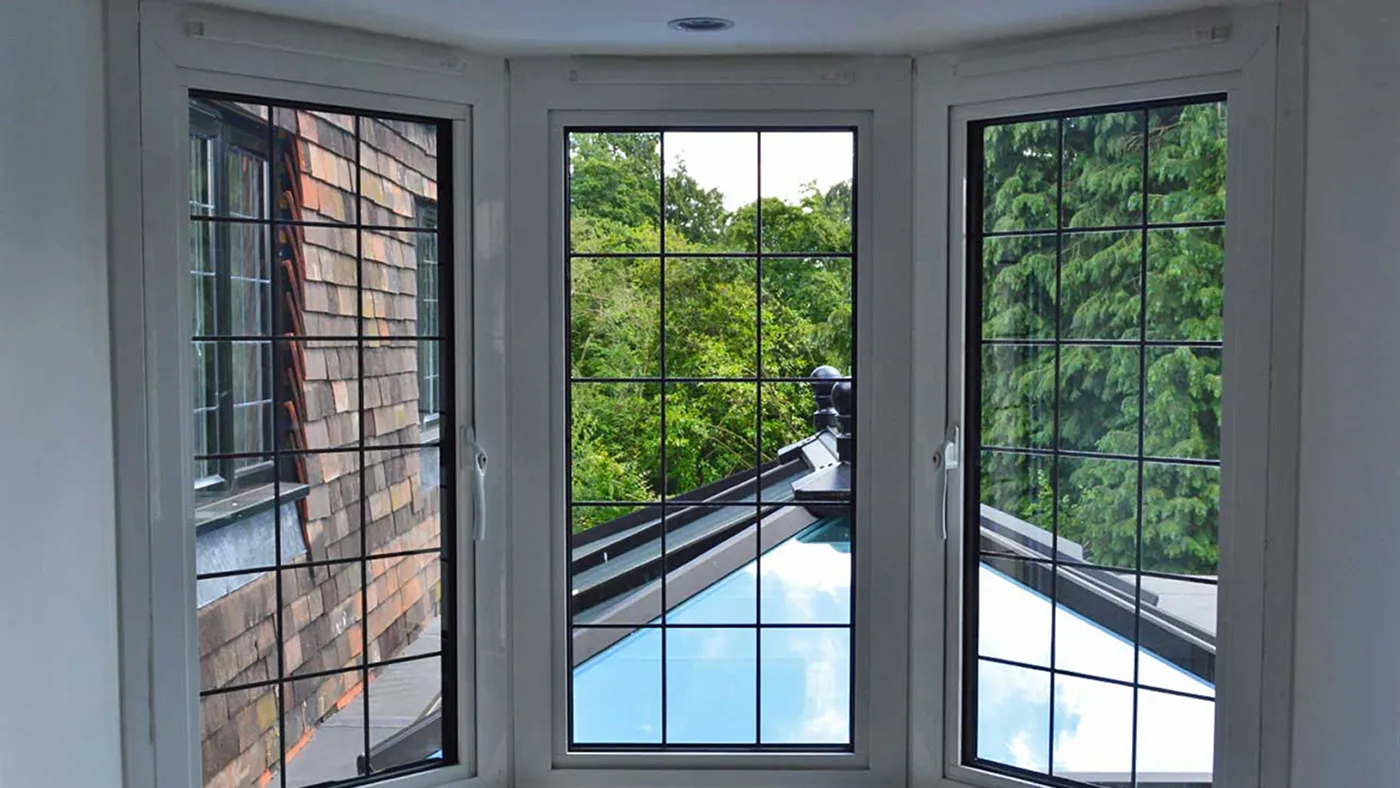
Lantern rooflight · Flat roof extension, Gerrards Cross
01 / 03Two products, one purpose
Roof lanterns and flat rooflights — what each one is and when each one is right
Both products deliver overhead natural light into the room below. The differences are structural, visual, and planning-related. The right choice depends on your roof, your room, and what matters most to you.
Statement Overhead Glazing
Roof lanterns
A roof lantern is a raised, glazed structure that sits on a kerb above the flat or near-flat roof surface. The aluminium frame lifts the glazed area above the roofline — typically by 400mm or more at the ridge — creating a sense of height inside the room as well as admitting overhead light. From outside, a roof lantern is a visible architectural feature on the roof. From inside, the raised structure increases the perceived ceiling height in the zone beneath it and creates a clear connection to the sky. For kitchen-diners, orangeries, and living extensions across Beaconsfield, Gerrards Cross and Windsor — where the quality of the interior space is part of the property's value — a roof lantern is frequently the specification that makes the extension feel considered rather than added. Sizes range from compact units suited to hallways and utility spaces through to larger configurations occupying much of the roof area of a full-width rear extension.
Best for
Discreet Overhead Glazing
Flat rooflights
A flat rooflight is a glazed unit set into a flat or very low-pitch roof surface on a low-profile kerb, sitting level with or just proud of the roof plane. From outside, a flat rooflight reads as a glazed panel in the roof surface rather than a structural feature above it — minimal visual impact on the roofline. From inside, the quality of overhead light it delivers is identical to a roof lantern. Flat rooflights are available in fixed and opening configurations — the opening option contributes to room ventilation in spaces where wall windows cannot meet building regulations requirements alone. They are the right specification where a planning restriction limits the height of any roof addition, where the roof pitch or structural configuration does not suit a lantern, or where the homeowner prefers the cleaner, more discreet external profile of flush overhead glazing.
Best for
What to consider
The decisions that determine how your overhead glazing performs
Roof lanterns and flat rooflights share the same installation fundamentals — the kerb, the waterproofing, the glazing specification, and the thermal performance decisions apply to both. We work through all of these during the home visit, with honest guidance on what your specific roof and room requires.
01
Will it leak? Addressing the primary concern directly
The concern that overhead glazing will leak is the most common hesitation we encounter, and it deserves a direct answer. A roof lantern or flat rooflight, manufactured to a high standard and installed correctly — with proper flashing at the kerb, the correct fall on the surrounding roof surface, and correctly sealed joints — will not leak. The most common cause of leaks is installation error, not product failure: flashing that has not been properly integrated into the roof waterproofing, a kerb that is not level, or sealant applied without adequate surface preparation. We install overhead glazing as part of a whole-system approach, which means we assess the existing or proposed roof structure before specifying the installation method, not after.
Practical note
If you are adding overhead glazing to an existing flat roof, we assess the condition of the roof membrane and the fall toward the drainage point before the specification is finalised. A rooflight or lantern installed on a failing roof membrane will cause problems regardless of the quality of the product.
02
Thermal performance and managing heat gain
Overhead glazing receives more direct solar radiation than any vertical surface, which means both roof lanterns and flat rooflights introduce a potential source of summer heat gain into the room beneath them alongside the light. A well-specified installation addresses both. The glazed units use low-emissivity glass that reduces heat loss in winter and solar control coatings that reduce heat gain in summer while maintaining light transmission. Thermally broken aluminium frames prevent cold bridging — the phenomenon where the metal frame conducts cold from outside to inside, producing condensation on the internal surface. A ventilation opening, available on most roof lanterns and in opening flat rooflight configurations, allows warm air to escape in summer and prevents the room from overheating on days with sustained direct sun.
Practical note
South and west-facing extensions in Ascot, Windsor, and parts of Gerrards Cross receive direct sun for much of the day in summer. We advise on solar control glass as standard for these aspects — it is a specification decision, not an optional upgrade.
03
Size, positioning, and proportion
The size of an overhead glazing unit should be proportionate to the floor area of the room it is serving. Building regulations guidance on daylighting for habitable rooms sets a minimum, but achieving a genuinely well-lit room often requires exceeding it. Positioning matters equally: a lantern or rooflight placed above the central floor area of the room distributes light most evenly; one positioned toward the perimeter may leave the zone furthest from the wall glazing in shadow. Where multiple flat rooflights are being specified across a large extension, the layout should be determined by the light distribution the room needs rather than by installation convenience. We advise on sizing and positioning for both product types during the home visit.
Practical note
Structural opening dimensions must be sized to accommodate the unit plus the kerb perimeter on all four sides. We provide exact structural dimensions during the survey for agreement with your building contractor before the roof structure is completed.
04
The structural opening and kerb
Neither a roof lantern nor a flat rooflight sits directly on the flat roof surface — both sit on a raised kerb that forms the structural perimeter of the opening and is critical to the weatherproofing of the installation. The kerb must be level on all four sides, correctly formed within the roof structure, and properly flashed into the roof waterproofing layer. If the overhead glazing is being planned as part of a wider building project, the kerb specification must be agreed with the builder before the roof structure is completed. If it is being retrofitted to an existing extension, we assess the structural opening and existing roof condition before specifying how to proceed.
Practical note
We do not install overhead glazing on existing roof structures we have not assessed. If we identify a problem with the existing roof or kerb that would compromise the installation, we advise on how to address it before any work is agreed.
Reviews
What your neighbours are saying
Real reviews from homeowners across South Bucks and East Berkshire. Every one verified through Google.
We couldn't be more happier with your lovely work men who were very polite and helpful. We will call again one day x
Mrs Ryan
Hayes
We were very happy with the service we received. We understand the delays were out of your control. The guys who came to fit the windows were really nice and efficient. Joe has been lovely from start to finish on this job! Alpha Windows has given us the best level service from all the window companies that we spoke to. The other companies had poor service and one of them was quite rude. So overall, we can't complain and are happy we went with Alpha windows!
Mr & Mrs Hussain
Stoke Poges
I should have posted this 4 years ago when I had my windows done but was lazy extremely happy with all my windows & front door. I wanted to check something’s. Amazing customer service from Victoria! & Joe came round the next day after 4 years! Cannot recommend Alpha enough! Only company I will be using. Thanks all at Alpha.
Tim Davis
Iver
We have been regular customers of Alpha Windows for some time and have always found them professional and easy to deal with. Visits for quotes are arranged swiftly and quotes are received promptly too. The fitting team are always very helpful, do a good job and leave the premises clean and tidy.
Hannah Graves
Gerrards Cross
It has been a total pleasure to work with you all over the last couple of months. Since the drama with Ridgwell we were worried about trusting another company but from the first contact with you via phone and seeing you face to face in the showroom we were put at ease. You were so friendly and listened to our needs and worries and helped us chose what was right for us.
Claire
Iver
From the initial engagement right through to the installation, Alpha Windows have been outstanding. Every question I had was answered promptly and clearly, and they were extremely helpful in accommodating my requested design. The pricing was very competitive, and the final product exceeded my expectations — the door and surrounds are absolutely beautiful.
Nicola
Gerrards Cross
Common questions
What homeowners ask us about rooflights and roof lanterns
-
The light quality they deliver is identical — both provide overhead natural light that distributes across the room below. The differences are structural and visual. A roof lantern sits on a raised aluminium frame above the roofline, which adds interior height and a more prominent external presence. A flat rooflight sits at or just above the roof surface with a minimal external profile. Roof lanterns suit situations where a statement architectural feature is part of the brief, where the height of the frame adds useful volume to the room, or where the structural budget allows for the fuller specification. Flat rooflights suit situations where visual discretion is a priority, where planning or structural constraints limit the height of any roof addition, or where multiple smaller units are more appropriate than a single large lantern. We advise on the right choice for your specific roof and room during the home visit.
-
A modern aluminium rooflight or roof lantern, manufactured to a high standard and installed correctly, will not leak. The causes of leaks are almost always installation errors — flashing not properly integrated into the roof waterproofing, a kerb that is not level, or sealant applied without adequate surface preparation. Product quality matters too: cheaper systems with thinner profiles and lower-quality seals are more likely to develop problems over time. We assess the existing or proposed roof structure before installing any overhead glazing, address issues with the kerb or membrane before the unit is fitted, and use flashing and sealant products designed specifically for glazed roof applications. If we are not confident the installation can be done correctly, we say so.
-
This is a legitimate concern for south and west-facing roof surfaces, and it is best addressed at the specification stage rather than after installation. Solar control glass — which allows light through while reducing the proportion of solar heat that passes with it — is recommended as standard for exposed aspects. A ventilation opening within the lantern structure or an opening rooflight unit allows warm air to escape from the top of the room when temperatures rise. Blinds can also be fitted to the internal face of a lantern for additional shading control. For north-facing or heavily shaded roof surfaces, summer overheating is rarely a concern. We advise on the appropriate specification for your specific aspect during the home visit.
-
All flat rooflights are manufactured with a slight fall built into the frame — even a nominally flat rooflight is not perfectly horizontal, and the frame profile is designed to direct water toward the roof drainage rather than allowing it to pool. What matters is that the surrounding roof surface also falls correctly toward its drainage point and that the rooflight is not positioned in a low spot on the roof where water would collect regardless of the rooflight's own profile. We assess the existing or proposed drainage geometry during the survey.
-
Yes, but it is more straightforward to plan for it during construction. Adding a roof lantern or flat rooflight to an existing extension requires forming an opening in the existing roof structure, installing a properly formed and flashed kerb, and making good the surrounding roof membrane and internal ceiling. Whether this is practical and proportionate depends on the construction method of the existing roof, its current condition, and the size of the unit being considered. We assess all of this during a home visit and will say clearly if a retrofit is impractical rather than proceeding on the assumption that it is straightforward.
-
In most cases, adding a flat rooflight or roof lantern to a single-storey extension falls within permitted development rights and does not require a planning application. A flat rooflight must not protrude more than 150mm above the existing roof plane to remain within permitted development. Listed buildings require listed building consent for any external alteration. Conservation areas — including parts of Windsor and Beaconsfield Old Town — may have specific restrictions on rooflight installations where the roof is visible from a public area. We identify what applies to your property during the home visit and advise accordingly before any work is agreed.
-
A flat rooflight installation is typically completed within a day, including forming or adjusting the kerb if required. A roof lantern installation typically takes one to two days. If preparatory work is required — adjusting the kerb, addressing the roof membrane, or making good the structural opening — this adds time and is quoted separately before any work is agreed. Lead time from order to installation is typically two to four weeks for flat rooflights and three to five weeks for roof lanterns, depending on size and colour specified.
-
For most window and door replacements, no. Like-for-like replacements fall under permitted development rights and require no planning permission. If your property is in a conservation area — parts of Windsor and Beaconsfield Old Town, for example — or if it's listed, there may be restrictions on colour, style, or material. We know the local areas well and will flag anything relevant during your visit.
-
Yes. FENSA registration means every installation we complete is certified to meet current building regulations, and the work is registered with your local authority automatically. This is important if you ever sell your home — solicitors will ask for it. You don't need to do anything; we handle the registration on your behalf.
-
Our installations come with a 10-year guarantee as standard, covering both frames and sealed glazing units. Combined with FENSA registration and our full public liability insurance, you're protected throughout the installation and long after completion.
-
Yes. We remove all old frames and glass and dispose of them responsibly. We also leave your home clean and tidy at the end of every job — it's part of how we work, not an optional extra.
-
We don't consider a job complete until you're satisfied. If something isn't right, tell us and we'll fix it. Our reputation in South Bucks has been built over 20 years — we have every reason to make sure you're happy.
The process
What happens from first contact to finished installation
Get in touch
Tell us what you are thinking
Fill in the short form below or give us a call on 01753 663663. There is no obligation and no sales process triggered by making contact — just let us know what you are considering and we will take it from there.
We visit your home
A proper look at your property
We visit at a time that suits you — usually within a few days. We measure every opening, assess what is there, and talk through your options honestly. We bring samples so decisions can be made against your actual property in natural light.
Your written quote
Clear costs, no surprises
We follow up with a written quote that covers everything involved. No hidden charges, no items that appear later. There is no pressure to decide on the day and no uninvited follow-up calls. You take as long as you need.
Installation
Done properly, left tidy
Our fitters work through each opening one at a time so your home is never left exposed. Furniture and flooring are protected throughout. Old frames are removed and disposed of. Before we leave, everything is tested and you are walked through the result.
Free no-obligation quote
Get a free quote for your rooflights
Tell us about your extension or roof, the room below it, and what you are trying to achieve. We will be in touch within one working day to arrange a home visit at a time that suits you — no obligation, no automated calls, just an honest conversation about what is right for your roof and your room.
What to expect
No pressure, no obligation
We'll never chase you or push for a decision on the day.
We visit your home personally
Every property is different — we measure properly before quoting.
Clear, itemised quote — no hidden costs
A written quote with everything included. Take as long as you need.
Your details stay private
We'll never share your details or add you to a mailing list.